Goodbye, I love you.
I’ll be honest. Other than the fact that I’ve walked through a lot of loss lately, I feel somewhat ill-equipped to talk on this subject. It is an issue that is both existential and deeply personal. Why do bad things happen to good people? What happens when we die? How do I say goodbye to someone that I loved? How does life keep going when I’ve experienced such a tectonic-level shift? I’m not sure I have the answer to any of these. But I do know what it’s like to experience grief, and I’ve supported friends and clients who are mourning. So I hope I’ve learned some things along the way that I can share.
When we talk about grief, the first thing that usually comes up are the Kübler-Ross stages of grief: denial, anger, bargaining, depression, and acceptance. While this model holds a lot of wisdom, I find that it can feel oversimplified or lead to feelings that you are “doing it wrong.” In my experience, and what I’ve observed in my clients, grief is more like an emotional stew - a bunch of things just simmering together. Or an ever-present shadow, shifting throughout the day. At moments, when we are busy at work or getting the kids ready for bed, the shadow might be small - a midday wisp. And then you might be out to dinner with friends, and you’re mid-laugh, and suddenly the grief washes over you - the shadow growing until it’s bigger than you actually are. The happiness you just felt is stewing alongside a healthy serving of guilt - how can you have fun when the person you loved is gone?
Part of the journey is learning to live with the shadow of grief. Orson Scott Card writes, “Life is full of grief, to exactly the degree we allow ourselves to love other people.” This so perfectly illustrates the duality of life, the yin yang of lightness and darkness. We could prevent a life of grief, but that would mean living a life detached from love. Love and connection are such essential parts of the human experience. Avoiding grief would mean sacrificing the bliss of a first kiss, the awe of holding your baby for the first time, the joy and peace of a long conversation with a best friend. To me, those are the moments that make life: when my heart is so full it feels as though it might burst. In those moments, I’m not thinking about how much this is going to hurt later. If I did, I might hold back and miss the richness of a loving connection. When the pain of loss comes, I will try to find comfort in knowing I loved with abandon.
We are often told “time heals all wounds,” and perhaps there is some truth in that. The shadow of pain, which can feel all consuming at first, does seem to lessen as the days, years, and decades pass. But I prefer to think of grief as a friend of mine once explained it: grief doesn’t grow smaller with time, but instead time grows bigger around it, so in comparison the grief doesn’t take up as much space in our life anymore. Picture it like two circles, one inside the other. The inner circle is the grief, the outer circle your life. As time passes, the outer circle grows, but the inner one stays the same. The grief may feel less intense, less constant, but it hasn’t really changed, your life has just changed around it. As Megan Devine writes in her book on grief, It’s Ok That You’re Not Ok, “Some things cannot be fixed. They can only be carried.” And so while the burden of grief may lighten with time, it seems we carry it with us for the rest of our lives.
As life continues forward, it can bring a whole new sense of loss: the loss of what was to be. I don’t know if my brother ever fell in love. How sad if he never did. Or the dreams you held for the child that stopped growing in your belly—what would they have looked like? What would they have grown up to be? The cancelled weddings, the childhood best friend, the parent never meeting their grandchild. As life grows and expands, so does the ledger of moments you wish they could have experienced, and you feel the absence of them again. The pit of loss in your stomach. And time passes, and the flowers and meals and cards of sympathy have ceased ages ago. Maybe it feels you should be past it. Yet, as Mitch Albom writes, “Death ends life, not a relationship,” and who that person was, the beauty they brought to the world, can continue in that connection. In this way, they are still with us. But that doesn’t mean we shouldn’t miss them.
Another tough part of loss can be the feeling of regret. Perhaps you had a strained relationship with a parent who died. Or the last thing you said to your friend was unkind. Or if only you had paid for rehab or made the doctor’s appointment sooner. For me, I felt guilt for not calling my brother enough, never having visited him at his home in Portland. This is an especially difficult pill to swallow. Here, I believe, it is important to acknowledge the regret you feel. Mourn the relationship you wish you had and the way you wish it could have been. Then extend grace to yourself, knowing you did the best you knew to do then. Finally, don’t allow the regret to overshadow all the good. It is easy to focus on what we did wrong, but important to remind ourselves of the beauty and joy that was also present.
Moving forward in the midst of grief is an act of bravery. Patti Davis writes, “It takes strength to make your way through grief, to grab hold of life and let it pull you forward.” Keep going, one moment at a time, hopefully finding healthy ways to cope. Allow yourself to move through the grief. This might look different for different people. For some it may be yelling and screaming in despair, and for others it might be sobbing until your tears dry up. It might be expressed creatively through song, dance, painting, or writing. Whatever it is, be courageous and allow yourself to feel it. Know you do not have to go this road alone. “Give sorrow words; the grief that does not speak knits up the o-er wrought heart and bids it break.” (Shakespeare). There is healing in bringing the words of our grief into the light. It can be incredibly comforting to speak with someone you trust about how you’re feeling. Often, we don’t need them to solve anything or offer advice, just listening can be a soothing salve to our despair. This can be especially powerful when speaking to someone who has experienced loss themselves. An empathetic ear can be incredibly comforting. As Elizabeth Gilbert writes, “if someone can assure you that they themselves have stood in that same place, and now have moved on, sometimes this will bring hope.” And ultimately, this is the goal. Not to forget the grief, but to feel hope for the future, and know that we can experience great loss and have the faith to keep going.
Things I’m into that you might be into, too:

Listen: “Deeper Well” by Kacey Musgraves - In case it’s not obvious, I love a lyric that moves me, and hers are words that I feel deep in my bones. The title track on this album is especially good, a sort of anthem of moving on, growing, and the power of prioritizing your own needs. I love Kacey’s folksy-pop-country vibe and can kinda imagine her living among the Laurel Canyon musicians in the 60s (via Texas, of course). There’s a vulnerability and honesty to her songs, that when paired with the warmth of her voice, make for a really gorgeous album.
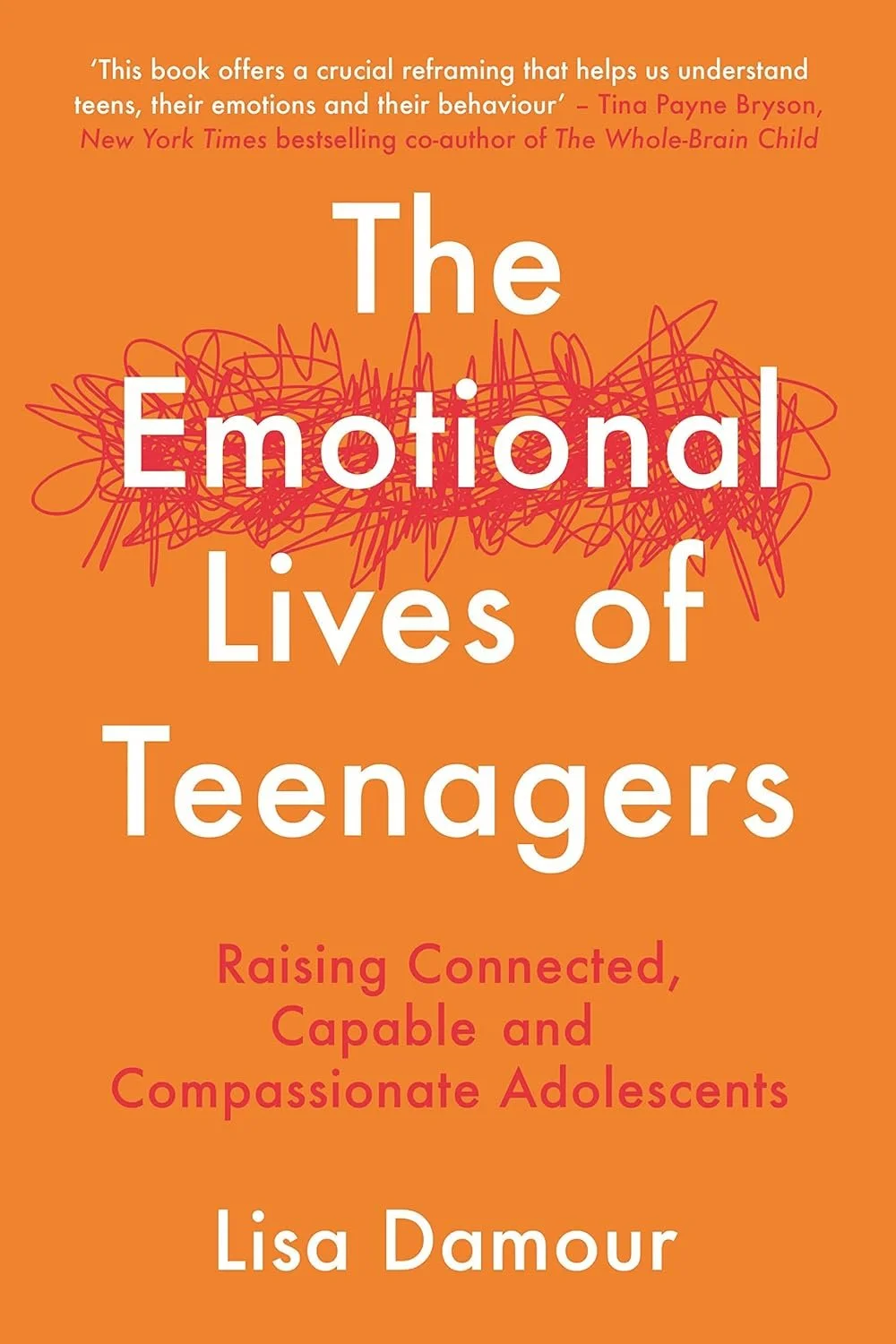
Read: “The Emotional Lives of Teenagers” by Lisa Damour - If you have any sort of interaction with teenagers, this is an essential read. Steeped in research and developmental understanding, Damour provides a clear and compassionate guide for how to support emotional and mental health in teens. She writes, “When we show that we are curious about our adolescents’ feelings—especially around the topics they bring up—we invite them to treat their emotions as informative and trustworthy.” I even found it helpful when thinking about my own teen years and those of my adult clients, and in moving toward healing by mourning what was harmful, and providing what was missing then, now.

Watch: “One of the Good Ones” at Pasadena Playhouse (through April 7) - I got a last minute solo ticket to see this play over the weekend and it was a true delight. The play feels a lot like a sitcom (the playwright, Gloria Calderón Kellett, works primarily in television), fast moving and chock-full of humor. But there’s also a message: it explores the complexity of perceptions of different generations, family dynamics, language, and race. Maybe grab some dessert next door at Bar Chelou afterwards since you’ll probably want to keep the conversation going once it’s over.

Try: Alison Roman’s Spicy Pork Noodle Soup - I invited my favorite Swifties over to watch The Eras Tour on its streaming release on Disney+ last week. Since it was dinner time, I wanted to offer them a meal—something quick to throw together, but delicious. I had made this soup once before and it had ended in disaster. Not the soup; that had been incredible. But as I was putting the mason jar of leftovers in my fridge, my fingers slipped on the slick fat-heavy pork broth residue on the jar, leading me to drop said jar, leaving a mess of broth, glass, and bits of ground pork all over my refrigerator. Which led to me shattering the glass panel in the refrigerator during clean up. It was all a mess and really put me off the soup for a while. Which speaks to how good it really is that I returned to it. There is very little slicing (a time saver), the broth is complex and richer than you’d imagine based on the cooking time, the noodles add a nice heft, and it’s quite affordable. And the Swifties loved it. Just be careful when handling any leftovers (if there are any leftovers, really).